“Can you give me 25% contingency for the stuff I don’t know?”
Clive White calls that the most difficult conversation on day one of planning any transformation. I didn’t let him finish. “They’re not going to do it,” I said, because I’ve sat on both sides of that table and I know how it goes.
The contingency for the unknowns gets taken out at the start. Nine months in, you go back for more. In Clive’s example, another half a million pounds. The risks you highlighted on day one are starting to show, and something has to give. And you get the look. The one that says you should have seen this coming.
Except you did. It was in the plan, until it was taken out.
That exchange has stayed with me, because it is the human gap in two sentences. The plan doesn’t fund the unknown. And most of the unknown is human: how people will respond, what they’re worried about, what they’ll only say once it’s too late to change the budget. When it finally surfaces, the failure gets pinned on a person, not on the decision that left it unfunded.
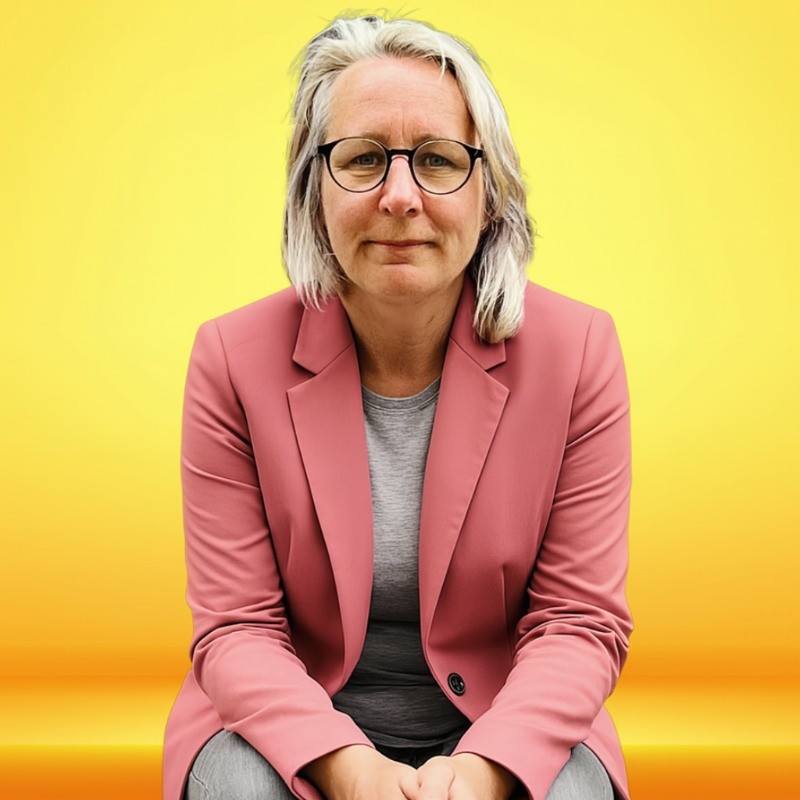
Clive and I worked together at Zurich years ago, him as strategy director, me as head of IT strategy and business architecture. When he joined me on Whatever Next? Unplugged, it felt like picking up a conversation we’d started then. Since Zurich he’s led transformation in insurance, in national telecoms infrastructure, in a sports governing body, and now in AI. What he’s learned across all of it is that “the industry may change, but the problems are the same under the covers.”
A few moments from our conversation show what those problems are.
The 25% nobody will fund
Clive isn’t having a go at CFOs. Financial discipline matters for credibility and for the survival of the business. His point is that no transformation he’s been part of has followed a straight line. It goes backwards, left and right before it moves forward, and that curvy path is exactly what the contingency is for.
“To believe you can hit a perfect plan over a five-year program is madness.”
If someone shows you an A to Z plan with every milestone perfectly executed, he says, they’ve either not done it or they’re selling something.
Why does everyone hit their numbers while the programme fails?
I asked Clive why people agree in public and disagree in private. I expected him to talk about courage or culture. He talked about incentives. The CTO is tied to IT, the CFO is tied to the money, “and you’ve got somebody in the middle called change.” Each of them can succeed on their own measures while the big outcome slips away. His answer is to tie everyone to the same result: “everybody succeeds if we hit the outcome. No one succeeds if you don’t.”
That reframed something for me. The private disagreement isn’t a character flaw. People say different things in private because they are being measured on different things.
There’s no CTO box for AI
Clive traced every wave of technology, from mainframe to client server, dot com, cloud and SaaS. Each time, the same reflex: “thank God for that. It’s a CTO problem.” Spend the money, but go and fix it over there.
AI doesn’t go over there. It reaches into every role, so the question is no longer whether the technology people will be replaced. It’s whether it removes my team, and whether it changes how I have to work. “No one can hide from AI.” That includes the people at the top table.
Who are we really planning for?
Clive has his own version of Pareto for any organisation going through change. Ten percent say thank God, we should have done this two years ago. Ten percent give you the ten reasons it won’t work, or the ten things that were tried before. The other 80% say, in effect, “I kind of get it. It sounds a little bit different, go prove it.” And it’s about mindset, not role.
Most change plans are written for the loudest 20%, either to please the enthusiasts or to win over the resisters. Either way, you miss the people who are simply waiting to see. Clive’s answer is to create early moments where change feels positive for as many people as possible, and to build a culture where managed mistakes are allowed.
Not personal, but personable
The hardest moment in our conversation was Clive’s example from the move to online banking. A branch director has to tell their own people that a good proportion of them will be out of work. “That’s a tough message to give.” That branch director, he said, needs to be well supported through it, because they’re the one who has to make the new model work afterwards.
His phrase for it is
“business is not personal but needs to be personable.”
Retraining, redeployment, looking after people. Not a cut and shut deal.
We sometimes count the cost to the people affected. We almost never count the cost to the person who has to tell them.
What would the board have to change?
Clive always asks to see the CEO before he says yes to a transformation. The CEO’s job, as he sees it, is to build a leadership team that gives one answer to the tough decisions before anything reaches the rest of the organisation. Fragmentation at the top, he says, happens all too often.
I’d take that a step further, to the board. What would it look like if ….
….the contingency conversation happened before the plan was approved, not nine months after?
…. nobody at the top table could win while the programme lost?
… AI was treated as everyone’s problem, not a box for the CTO?
… the plan was written for the 80% waiting for proof, and the people carrying the hardest messages had support built in from the start?
Clive is honest that it’s a balancing act. You can’t spend too long and too much just bringing people along while the organisation catches up. I agree. But you can’t balance something that has no line in the budget.
Get curious
Clive’s takeaway came down to two words: get curious. Not technical, curious.
“It’s not over there and somebody else’s job.”
The human side of change has always been somebody else’s job too. HR’s, the change team’s, whoever was left holding it nine months in. AI just makes that harder to get away with. Nobody gets to hide any more, and that includes whoever signs off the plan.
Whatever next?
You can hear the full conversation with Clive on Whatever Next? Unplugged.